
13 Aug
Being hit by an intoxicated driver can make an already difficult car accident significantly more complicated. In addition to the normal insurance and injury issues, the crash may involve a criminal investigation, blood or breath testing, additional evidence, and potentially more than one responsible party.
If you are injured by a suspected drunk driver in Texas, understanding what happens next can help you protect your rights and preserve important evidence.
Call 911 and Let Law Enforcement Investigate
After any accident involving injuries or suspected intoxication, contacting law enforcement is especially important.
Texas treats driving while intoxicated as a criminal offense, and the driver may face a separate criminal investigation. Law enforcement may conduct field sobriety testing, request breath or blood testing, or collect other evidence related to impairment. Texas DPS notes that a blood-alcohol concentration of 0.08% or higher can trigger administrative consequences for an adult driver’s license, although a person can be considered intoxicated under Texas law based on impairment even apart from a specific BAC reading.
What this means for you: The criminal case against the driver and your civil injury claim are separate matters. A DWI arrest does not automatically resolve your insurance claim or determine the compensation available to you.
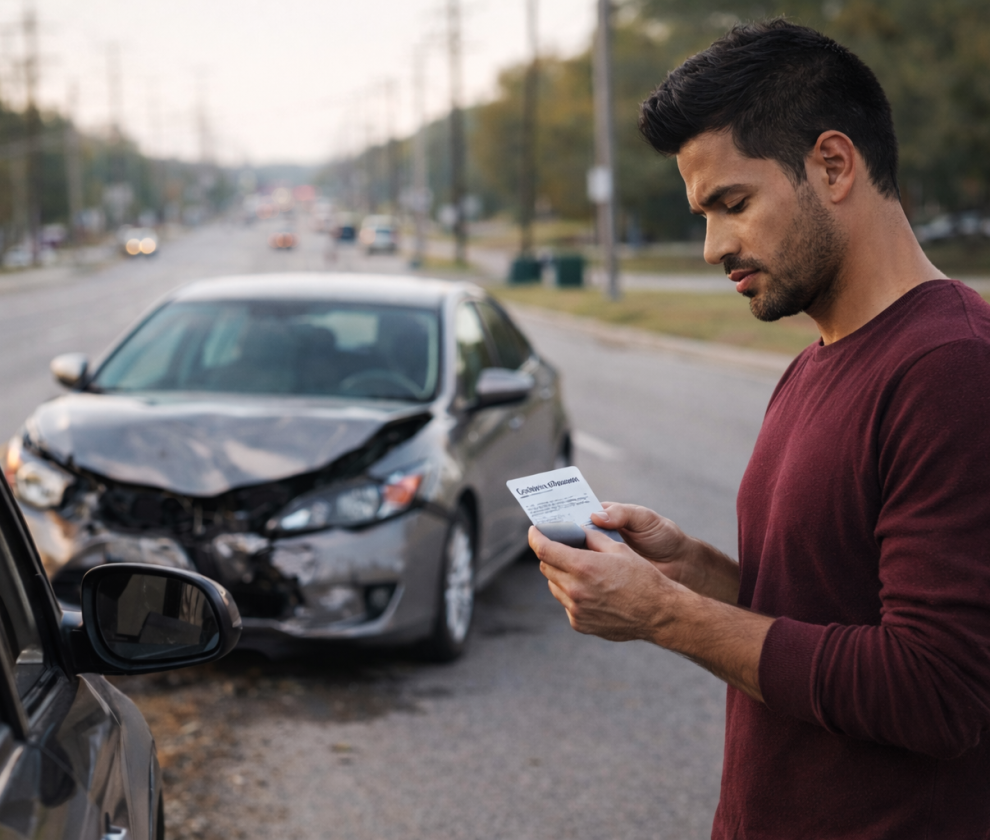
Document the Accident Carefully
Evidence can be particularly important in an accident involving suspected intoxication.
If you can safely do so, collect:
- Photos and videos of the vehicles and scene
- Contact information from witnesses
- The other driver’s insurance information
- The police report number
- Photographs of visible injuries and property damage
Texas Department of Insurance recommends collecting driver and witness information, documenting the vehicles and damage, and obtaining the police report when law enforcement responds.
Do not put yourself in danger trying to confront or investigate an intoxicated driver yourself. Let law enforcement handle that part of the scene.
Get Medical Attention Even If Your Injuries Seem Minor
The presence of a drunk driver does not change one of the most important steps after any collision: getting medically evaluated when appropriate.
Some accident-related symptoms may not become noticeable immediately. Medical records can also become important documentation of what injuries were caused by the crash.
Keep copies of medical records, bills, prescriptions, and information about follow-up treatment.
Expect a Criminal Case and a Civil Claim to Move Separately
One of the biggest sources of confusion in drunk-driving accidents is that two different processes may be happening at the same time.
The state may pursue criminal charges against the intoxicated driver. Separately, an injured person may pursue an insurance claim or civil case for accident-related losses.
The outcome of one process does not necessarily determine the other. Your civil claim still requires evidence regarding responsibility, injuries, damages, and causation.
Compensation May Involve More Than Vehicle Repairs
Depending on the facts of the accident, an injured person may seek compensation for legally recoverable losses such as:
- Medical expenses
- Lost income
- Vehicle damage
- Physical pain and impairment
- Other accident-related damages
Texas law also allows exemplary, sometimes called punitive, damages in certain cases when the required heightened legal standards are proven. They are not automatic simply because alcohol was involved; Texas generally requires clear and convincing evidence of fraud, malice, or gross negligence. Texas law also contains specific rules concerning exemplary damages in cases involving intoxication assault or intoxication manslaughter.
Another Party Could Sometimes Be Involved
In some cases, investigating where the intoxicated driver obtained alcohol may also become relevant.
Texas’ Dram Shop Act can create potential liability for an alcohol provider in limited circumstances. Generally, there must be evidence that when alcohol was provided, it was apparent to the provider that the individual was obviously intoxicated to the point of presenting a clear danger, and that intoxication must have proximately caused the damages.
This is a demanding standard. A 2025 Texas Supreme Court decision emphasized that evidence showing someone was intoxicated later is not necessarily enough by itself to establish how that person appeared when the alcohol was served.
What this means for you: Identifying all potentially responsible parties may require investigating much more than what happened in the few seconds immediately before the collision.
What If the Drunk Driver Has Little or No Insurance?
A serious accident can produce damages that exceed the other driver’s insurance limits.
If the responsible driver is uninsured or underinsured, your own UM/UIM coverage may become important. Texas Department of Insurance explains that uninsured/underinsured motorist coverage may help with medical bills, vehicle damage, rental expenses, diminished value, and other covered losses when the responsible driver has insufficient insurance.
That is one reason reviewing all available insurance policies can be important after a serious collision rather than focusing exclusively on the intoxicated driver’s policy.
Why Having an Attorney Can Be Important
Drunk-driving accident cases can involve several moving parts at once: law enforcement evidence, medical treatment, insurance companies, the driver’s criminal proceedings, potential UM/UIM coverage, and occasionally questions about whether another party may share responsibility.
An attorney can help preserve evidence, collect records, identify available insurance coverage, communicate with insurers, and evaluate the different potential sources of recovery.
Texas Department of Insurance itself notes that when another driver’s insurer refuses to pay for accident damage or medical bills, obtaining legal help may be an available next step.
How Parks Law Firm Can Help After a Drunk-Driving Accident
Parks Law Firm helps Texas accident victims navigate the insurance, medical, and legal issues that can follow a collision with an intoxicated driver.
Our team can help obtain accident documentation, communicate with insurance companies, review available coverage, coordinate appropriate medical care, and investigate the circumstances surrounding the crash. When additional sources of potential responsibility or insurance coverage exist, those issues can also be evaluated based on the facts of the case.
The goal is to make sure important evidence and available options are not overlooked while you focus on recovering from the accident.
Every case is different, and no particular settlement, recovery, or outcome can be guaranteed.
Important Note
This article is provided for general informational purposes only and does not constitute legal advice. The rights, available claims, and compensation in a drunk-driving accident depend on the specific facts, available evidence, insurance coverage, and applicable Texas law.