
06 Oct
If you’re still at the scene, start with safety: check for injuries, call for help when needed, and stay out of moving traffic. Photos and insurance calls can wait until everyone is out of immediate danger.
After a Texas car accident, the next steps are to exchange information, preserve what you can, and arrange appropriate medical care. You don’t have to settle questions about fault or payment on the roadside.
Check for Injuries and Call for Help
Check yourself and your passengers. Tell the 911 dispatcher your location, how many vehicles are involved, and whether anyone appears injured or trapped. Use a nearby intersection, exit number, or recognizable landmark if you don’t know the address.
Texas requires immediate notification to law enforcement when a collision causes injury, death, or vehicle damage that prevents normal, safe driving. Drivers also have duties to stop, exchange required information, and provide reasonable assistance.
Follow the dispatcher’s instructions. If someone needs emergency care, don’t delay that care to finish collecting evidence.
Move Out of Traffic When It Is Safe
For a minor collision without injuries, move a safely drivable vehicle out of the travel lanes. Turn on your hazard lights and choose a nearby place where you can exchange information without standing beside passing vehicles.
Texas has a specific move-off requirement for qualifying collisions on metropolitan freeways when every vehicle can be driven normally and safely. Moving to a suitable nearby location does not mean abandoning the scene.
If you’re unsure whether the car is safe to move, explain the situation to the dispatcher. Don’t take a photograph from an active lane just to preserve the original vehicle positions.
Exchange Information You Can Actually Use
Collect the other driver’s name, contact information, vehicle information, and insurance details. Make sure photographs of their insurance card are readable before leaving.
Get witness names and phone numbers, too. Someone who saw the vehicles before impact may have information that neither driver noticed. If an officer responds, ask for the report or incident number and the agency handling it.
Keep the conversation factual. Explain what you observed, and say when you don’t know an answer. You don’t need to argue with the other driver or agree on who will pay.
Photograph the Surroundings, Not Just the Dent
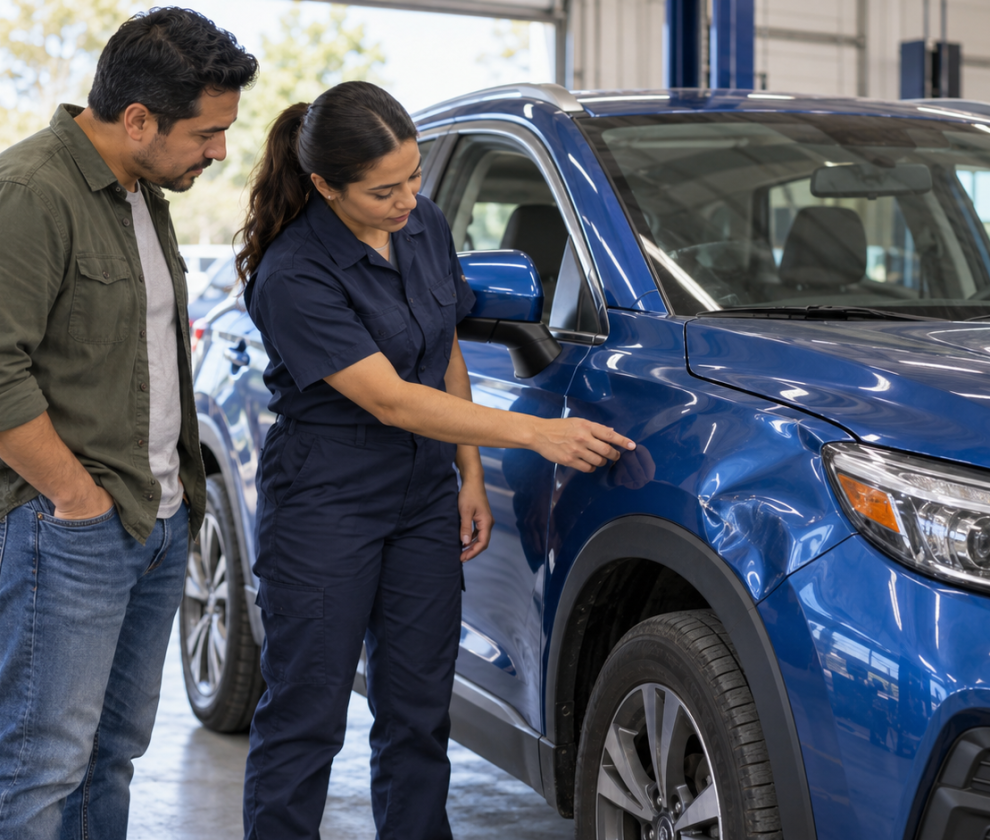
When it is safe, capture wide views and close-ups. Useful photos include vehicle damage, license plates, lane markings, traffic signals, and the surrounding intersection. Write down the time, location, weather, and your recollection of the collision.
A practical way to organize the record is to create one folder on your phone. Put the original photos there, along with contact details and any messages about the crash. Keep your own notes separate from statements someone else made.
If you have dashcam footage, save the relevant recording rather than assuming it will remain on the camera.
Pay Attention to How You Feel Afterward
Some concussion symptoms appear hours or days after an injury. Seek emergency care for warning signs such as a worsening headache, repeated vomiting, seizures, weakness, slurred speech, or difficulty waking up.
For other symptoms or concerns, contact a healthcare professional for guidance. Describe the crash and when each symptom started. Let the clinician decide what evaluation or treatment is appropriate.
Be accurate about how you feel. There is no need to exaggerate discomfort, and no benefit in dismissing a symptom because you hope it will pass.
Report the Crash to Your Insurance Company
Notify your insurer promptly. Ask for the claim number, the assigned adjuster’s contact information, and what documents they need. Your policy may contain reporting requirements.
Before ending the call, write down the next step. Who will inspect the car? Who should receive the photos? When should you follow up? Having those answers in one place makes the next conversation easier.
If a question calls for information you don’t have, say so. You can provide additional facts when they become available.
How Parks Law Firm Can Help
Once immediate safety and medical needs are addressed, Parks Law Firm can help you understand the questions that remain about an injury claim.
The firm can review accident documentation, identify evidence worth preserving, and explain how available insurance and Texas law may apply. Bring whatever you have, even if the records are incomplete. A useful first discussion starts with what happened, what you’re dealing with now, and what you need clarified.
Important Note
This article provides general information and is not legal or medical advice. Every case is different. Rights, coverage, deadlines, damages, and outcomes depend on the facts and applicable law. Seek emergency assistance for urgent medical concerns.